Picture Palace
A Design Innovation
What follows is the story behind the making of Picture Palace - how it came to exist, and why.
In 2025, I set out to make something that didn't exist - an experience/object for adults that was beautiful enough to display and alive enough to play with. I had z-e-r-o understanding of product design. I spent a year solving the lighting, the form, the friction, the utility. I wanted to reintroduce animation for adults in a playful and beautiful experience for the home. The one thing i did not want is clunky, obsolete kinetic object which somehow an adult simply just forgets after time. Furthermore, the digital and screen-aspect of animation was not fulfilling anymore, so I was forced by my own need to create a tactile, luminous analog archive that functions just as well as a lamp. First, I started experimenting with various kinds of illumination and at the same time- jjust by chance- a visual of old French cinematic technique from the 1900's called Ombro cinema visited me....and that was the starting point.
The starting point was simple: illumination and transparent acetate film. At some point while working with both, it became clear they could sit together - that light passing through film could become something alive. Around the same time Ombro cinema came into the picture and was understood properly. It works on a simple principle: a still image, when viewed through a moving grid, appears to animate. Any image, coded with the same animation interference, should come to life- any image! No electricity, no screen - just optics. Applied here to a small, handheld device, still very much in progress at the time. The idea was that it could live quietly on a shelf as a lit, framed piece of art - roughly the size of a small photograph. And the moment someone picked it up and moved any of the slides, it would become something else entirely: the image would come to life.
That was the magic. And that was what this was always reaching for.
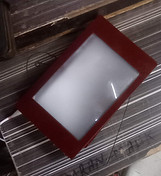
Lighting was the first real difficulty. It needed to be thin, and completely cool to the touch - because people would hold this in their hands. That combination is harder to find than it sounds. Then the shape, weight, and thickness had to work both ways: comfortable to hold during play, settled enough to leave alone on a surface.
The slide was its own problem. How much resistance was right? How little movement should it take before the image responded? The answer turned out to be almost none - the moment the slide shifts even slightly, the hidden optical system inside reacts, and still artwork begins to move. Figuring that out took the longest.
Once it did, the rest followed.
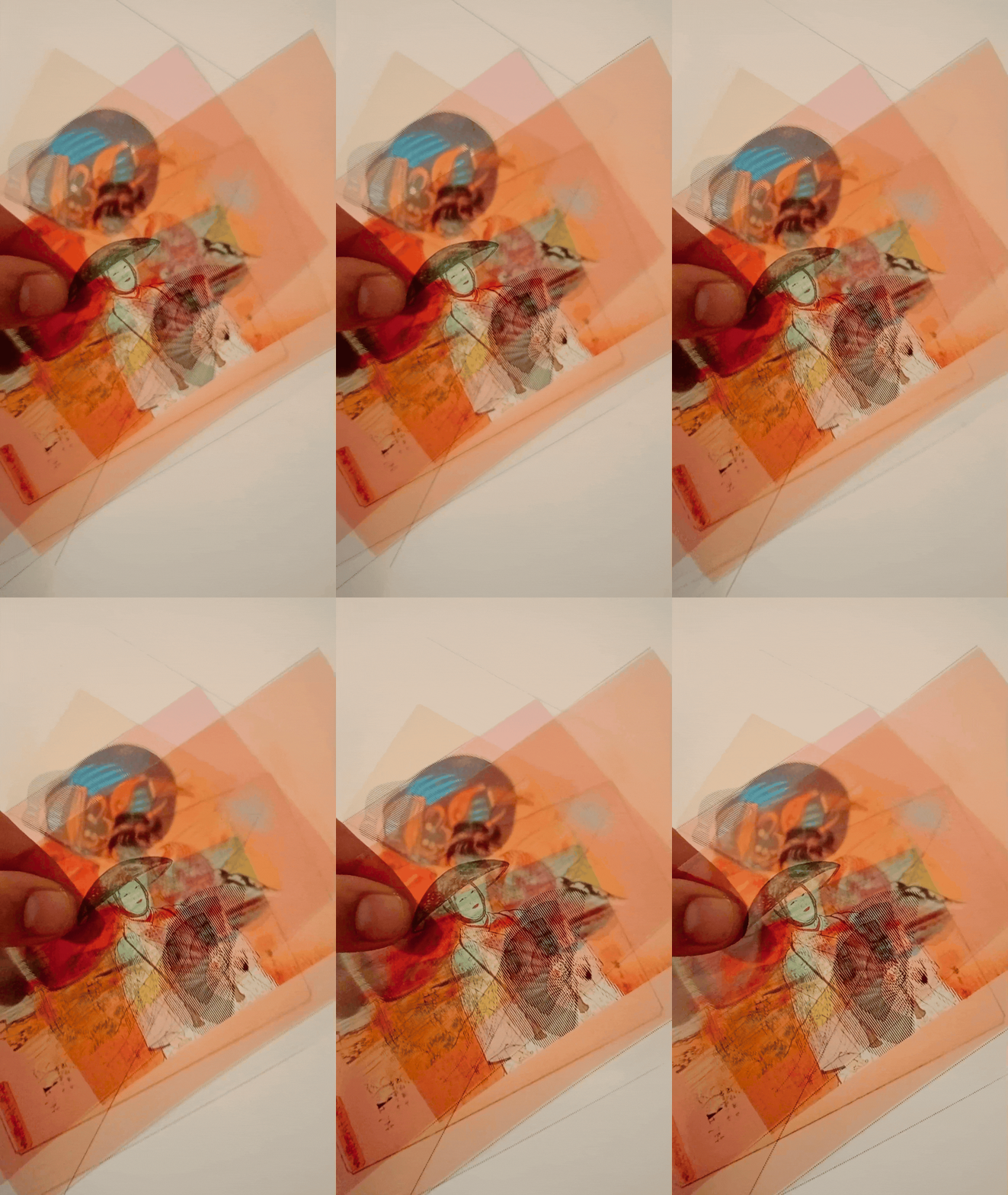
Working with transparent acetate also opened something unexpected. Layering the sheets revealed new possibilities - multi-layered techniques and visual conceptions that are still being explored. Some will find their way into future work entirely. But even within Picture Palace, this layering left its mark: several collections carry more than one story inside them, image upon image, depth upon depth, they create their own a small little world.
By then, the object had become something larger than a device - an experience that cannot be easily categorized. And as it grew, people arrived on their own: fabricators, carpenters, craftspeople, each skilled in exactly what was needed. The solitude of working alone gave way to something else - disciplined, skilled hands joining a process that had, until then, been entirely one person's.
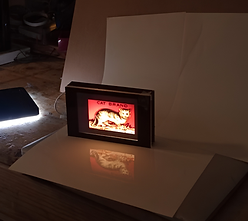


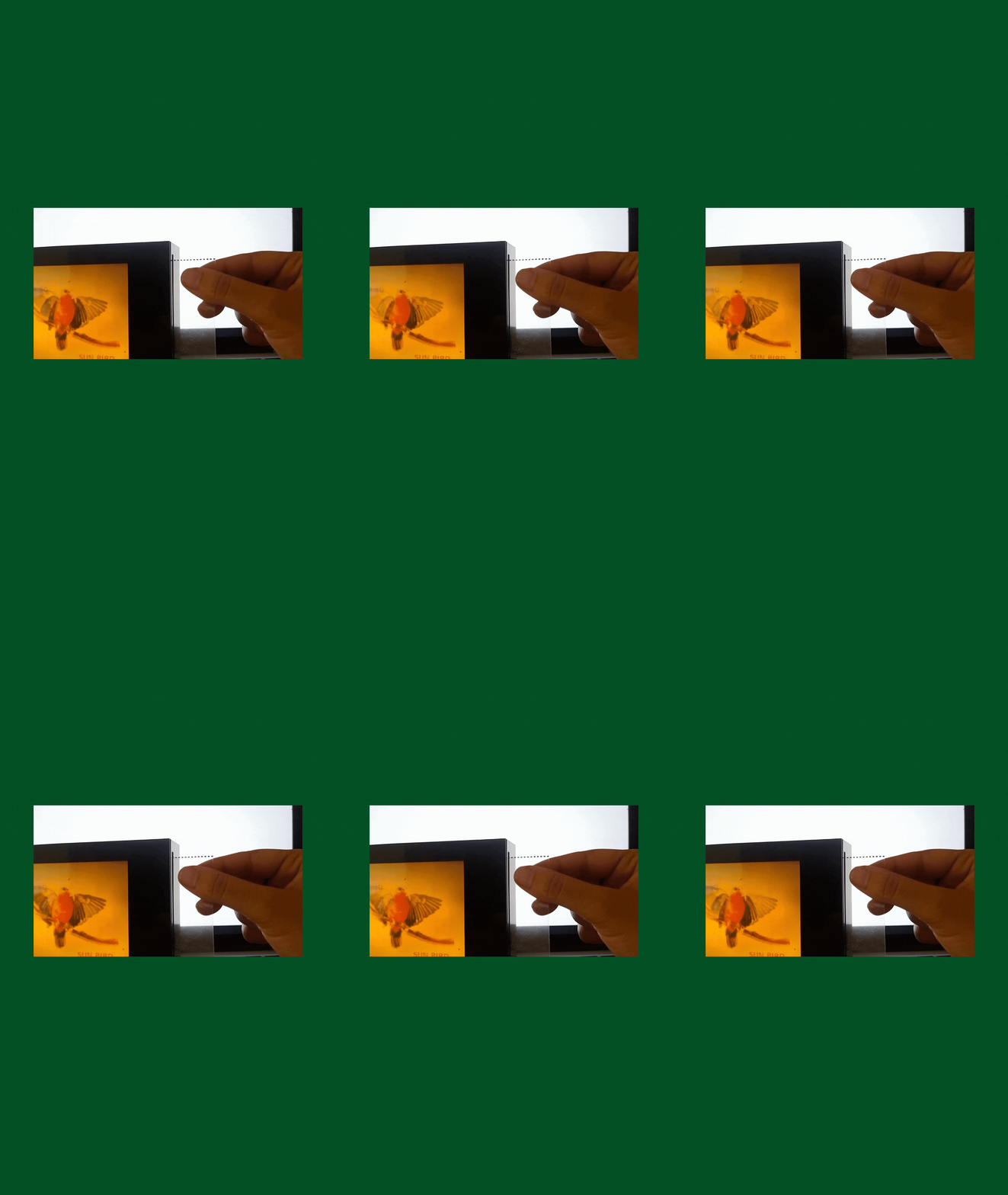
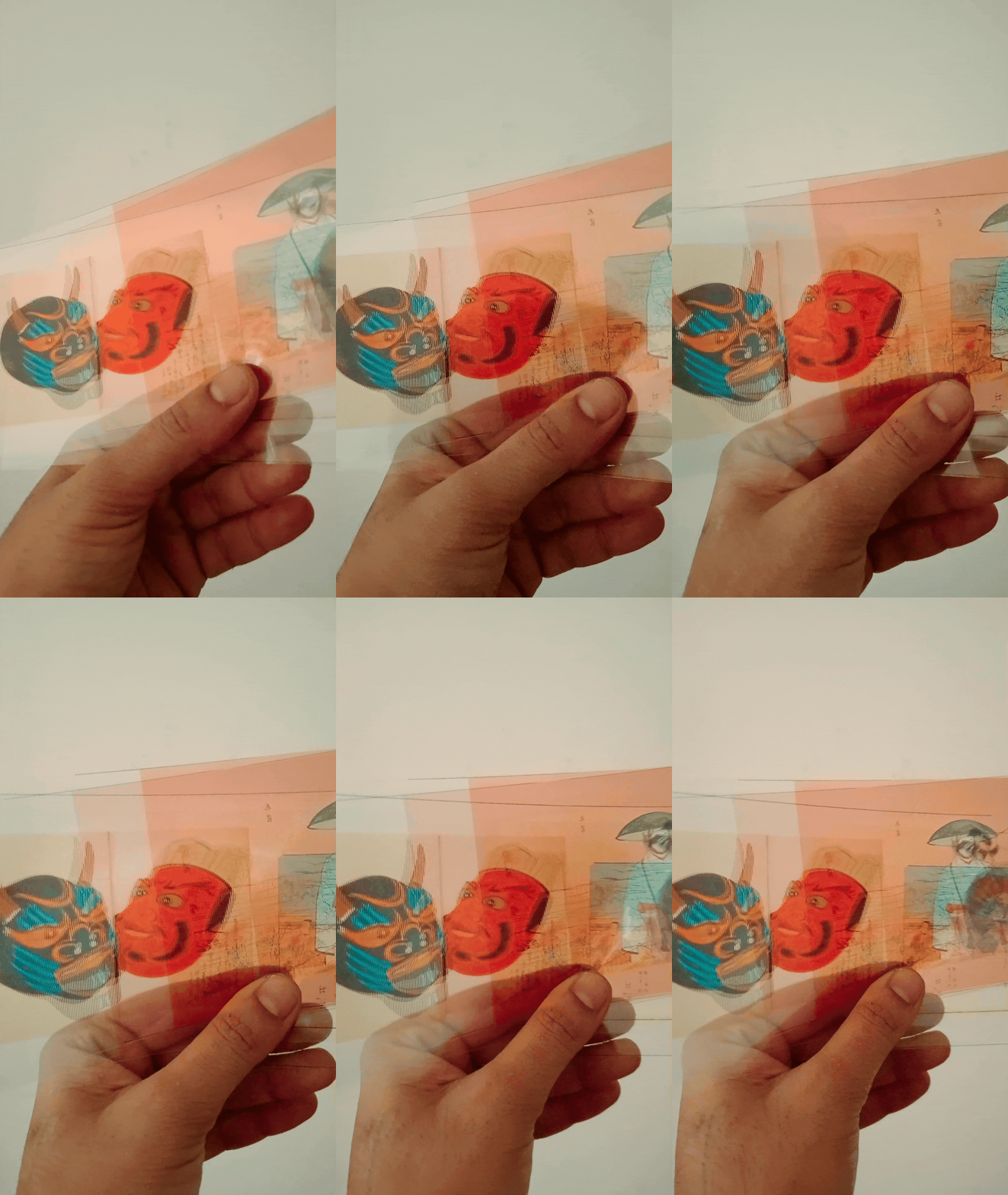
The slide system also solved something personal. There has always been a pull toward archives, toward old printed material - matchbox art, vintage graphics, things made before digital. Making the animations frame by frame from that kind of source felt natural. It's how the collections took shape.
.jpg)
The name came just before launch. Picture Palace was what people called cinema halls in India in the 80s and 90s. It had warmth to it. It still does. It had warmth to it. It still does.


